


Best Balance Bikes for Toddlers in Canada: How to Size and Choose One
Almost every balance bike listing leads with an age range. Two to five years. Eighteen months and up. It is the least useful number on the page. Two children the same age can be nine centimetres apart in leg length, and leg length is the thing that decides whether your child can actually ride the bike or just stands over it looking annoyed. This guide is about the number that matters, and the handful of things worth checking once you have it.
We sell balance bikes, so read this critically. We have tried to write the version we would want to read, including the parts that talk people out of buying one today.
What A Balance Bike Actually Does
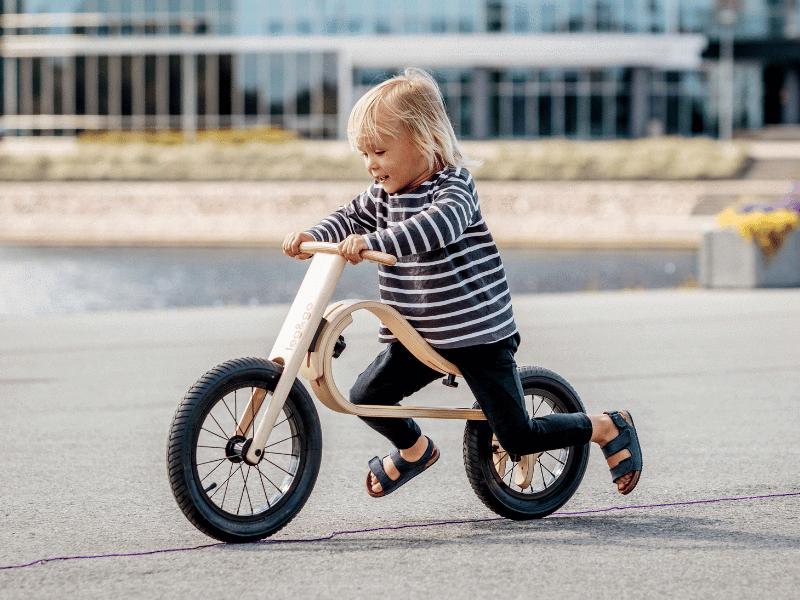
Pedalling is easy. Balancing is hard. That is the whole idea. A balance bike strips out the pedals and cranks so a child works on the difficult skill first, at walking pace, with both feet on the ground as a permanent safety net. They push, they glide a little further each week, and one day they lift their feet for ten metres without noticing they have done it.
Training wheels do the opposite. They guarantee the bike stays upright, which means the child never practises the thing that keeps a bike upright. That is why children who start on a balance bike often move onto a pedal bike quickly, and why the transition tends to be a single afternoon rather than a summer.
A balance bike is not a smaller bicycle. It is a machine for learning one specific skill, and it is very good at it.
Size It By Inseam, Not By Age
Stand your child barefoot with their back against a wall. Put a book between their legs, spine up, snug but not lifting them. Measure from the floor to the top of the book. That is their inseam, and it is the only measurement you need.
The rule is simple. The bike's lowest seat height should sit two to four centimetres below your child's inseam. That way they can sit on the seat and put both feet flat on the ground with a slight bend at the knee. If the lowest seat setting is level with or above the inseam, the bike is too big, whatever the box says about age.
For a nervous beginner, err lower. Flat feet mean they can stop instantly, and confidence is the entire game in the first month. Once they are gliding, raise the seat towards inseam height so the push gets longer and the glide gets further.
Most children land somewhere between eighteen months and two and a half years, but measure rather than assume. Our balance bikes list their seat height range on the product page for exactly this reason.
Five Things Worth Checking
A bike your child cannot lift is a bike they will not use, because half of learning to ride is picking it up off the driveway. A common guide is to keep the bike under roughly a third of the child's body weight. Weigh your toddler, then look for the bike's weight on the listing. If it is not listed anywhere, that usually tells you something.
Air filled tyres grip better and cushion more, which matters on gravel, grass and cracked pavement. They can also puncture and need topping up. Foam tyres never puncture and need nothing from you, but they slide more on loose surfaces. If your child will mostly ride smooth paths and indoor floors, foam is genuinely fine. If you are heading for the ravine trail, air is worth the maintenance.
The starting seat height gets all the attention. The range is what decides how many seasons you get. A seat that travels ten centimetres will follow a child through two summers. One that barely moves will not. Check that the handlebar rises too, because a child who has grown into the seat but not the bars ends up hunched.
Almost every toddler stops with their feet, and they will keep doing that long after you fit a brake. A hand brake becomes genuinely useful when a child is fast enough to outrun their shoes, usually around three or four, and only if their hand span reaches the lever with enough strength to pull it. Do not pay a premium for a brake your two year old cannot squeeze. Do check for one if you are buying a bike meant to last until five.
A steering limiter stops the handlebars spinning all the way round, which prevents the front wheel folding under a beginner. Useful early, and something confident riders often find restrictive later, so a removable one is best of both. Footrests are the most argued about feature on any balance bike. A well placed one gives a child somewhere to put their feet during a long glide. A badly placed one catches shins on every push. Look at where it actually sits rather than whether it is listed as a feature.
The Canadian Part
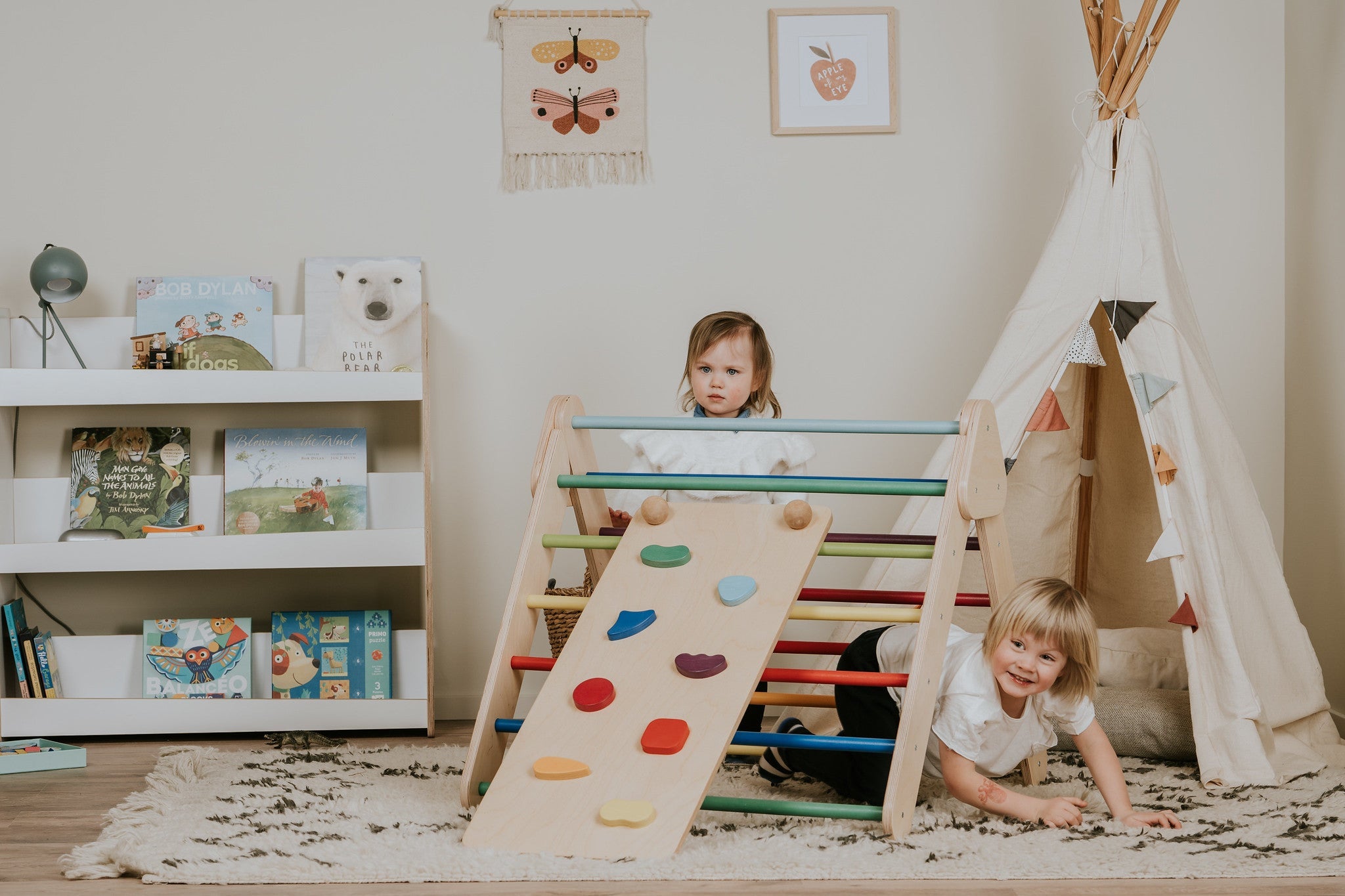
Buying a balance bike in October is a slightly odd experience, because you are purchasing something your child cannot use outdoors for five months. Two thoughts on that. A hallway or a cleared basement is enough space to learn the push and glide, and plenty of children make their real breakthrough indoors in February. And if outdoor riding is genuinely off the table until spring, indoor gross motor equipment such as a climbing frame often does more for a toddler through winter than a bike waiting in the garage.
When the bike does come out of storage, rinse and dry the frame if it saw road salt, and go round every bolt before the first ride. Seat clamps in particular loosen over a winter of temperature swings.
One more thing that is not optional: a properly fitted helmet from the very first push. Helmet requirements for children on bicycles vary by province, so check the rules where you live, but fit it correctly regardless of what the law asks of you. More on how we think about this in Safety First.
When Not To Buy One
If the lowest seat position on every bike you like is still above your child's inseam, wait. Buying big is the most common mistake parents make here, and the result is a bike that sits unridden for a year while the child decides they do not enjoy bikes. Measure again in three months.
If your child already rides a pedal bike with any confidence, you have passed this stage and a balance bike is a step backwards.
And if you have no flat, traffic free space within a short walk of your door, be honest about how often it will get used. A balance bike needs somewhere boring and level to be any fun at all.
Measure the inseam first, then compare it to the seat height range on the listing. If you are between two sizes, take the smaller one. Confidence beats longevity in the first year, and you can always raise the seat.
Browse our balance bikes for toddlers, or look at a transformable balance bike if you would rather buy one thing that changes as they grow.
Not sure which size suits your child? Email us at hello@truelittlenorth.com with their inseam measurement and we will tell you honestly which bikes fit and which do not, including when the answer is to wait a few months.
True Little North is a small family business in Toronto. We choose everything we sell the same way we choose things for our own children's rooms.


Laissez un commentaire